Definition
What is water damage mold cleanup?
Water damage mold cleanup is the work done after a leak or overflow to get a home dry before mold can establish itself, and to remove any growth that has already started. It sits between two trades: water mitigation, which is extraction and drying, and mold remediation, which is contained removal of contaminated material. Most real-world leaks need a bit of both.
The deciding factor is time. When drying starts within the first day or two, many materials can be saved and mold never gets a foothold. When a leak sat unnoticed behind a cabinet or under flooring for a week, the job shifts toward cutting out wet drywall and insulation and cleaning growth from the framing.
Either way, the goal is the same: return walls, floors and cavities to normal moisture levels, document that they got there, and make sure the source is repaired. It is the most common reason people call our line for Country Club mold removal, because nearly every indoor mold problem starts with water somewhere it should not be.
Methods
How does professional drying and cleanup work?
Professionals classify the water first, because that decides what can be dried and what has to go. The industry standard for water damage, IICRC S500, sorts water into three categories:
| Category | Typical source | What it usually means |
|---|---|---|
| Category 1 (clean) | Supply line, water heater, ice maker line | Many materials can be dried in place if work starts fast |
| Category 2 (gray) | Washing machine or dishwasher discharge, AC condensate | More cleaning; porous materials are often removed |
| Category 3 (black) | Sewage, toilet overflow with waste, floodwater | Porous materials removed; sanitizing required |
Clean water does not stay clean. After a couple of days in a warm house, a Category 1 loss can degrade to Category 2. The drying itself follows a set routine:
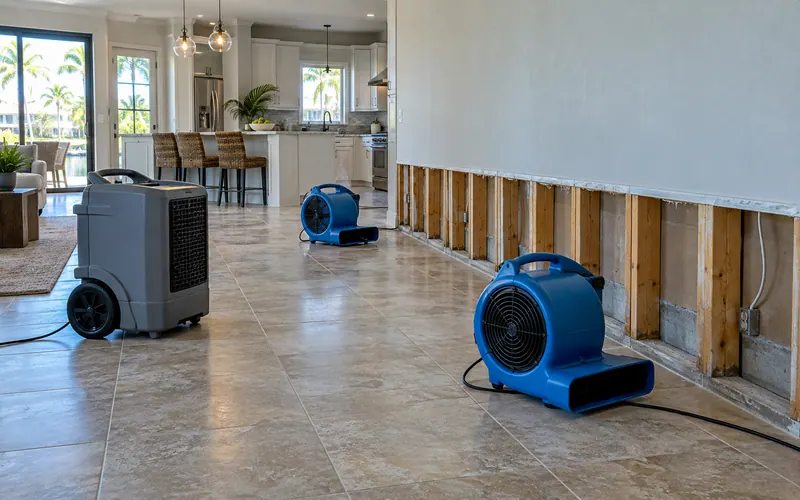
- Extraction with truck-mounted or portable units to pull standing water out of tile grout, carpet and pad.
- Opening the wall by removing baseboards and, where needed, making a straight flood cut a foot or two up the drywall so the cavity can breathe.
- Air movers to sweep air across wet surfaces and dehumidifiers to pull that moisture out of the room.
- Daily monitoring with moisture meters, recorded in a drying log against readings from unaffected material in the same house.
- Antimicrobial cleaning of affected framing and slab, followed by contained removal of any growth found.
Warning signs
What are the signs of hidden water damage?
Many leaks never make a puddle. These eight signs suggest water is getting somewhere it should not:
- A water bill that jumps with no change in how you use water.
- The sound of running water when every fixture is off.
- A warm spot on a tile floor, a classic sign of a hot-water slab leak.
- Loose or cracked floor tiles and grout that stays dark.
- Swollen baseboards or door casings near bathrooms, the kitchen or laundry.
- Rust or mineral streaks on the water heater or in the drain pan beneath it.
- A musty smell from a sink base, vanity or the AC closet.
- Ceiling stains under a bathroom or, in a condo, under the unit above.
Causes
Where do leaks usually start in Country Club homes?
Much of the housing here went up in the 1990s and 2000s, so a lot of plumbing parts and appliances are reaching the end of their working life at the same time. The usual suspects:
- Water heaters. Tanks corrode from the inside and can fail suddenly, often in a closet or garage next to living space.
- Supply hoses and angle stops under sinks and toilets, and the hoses behind washing machines.
- Slab leaks. Water lines that run under the concrete slab can develop pinhole leaks that surface as wet flooring or warm spots.
- AC condensate. A clogged drain line or rusted pan overflows into the closet and the wall beside it.
- Dishwashers and ice makers, whose small lines leak quietly under cabinets for months.
- Shared walls and ceilings in townhomes and condos, where a neighbor's leak arrives in your unit.
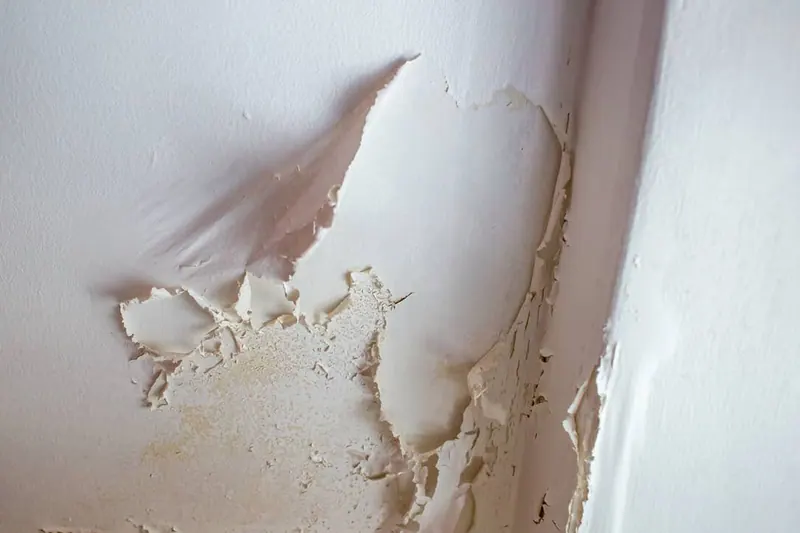
If the leak was ignored long enough for dark growth to appear on the drywall, the job moves into black mold removal with full containment.
Right now
What should you do in the first hour after a leak?
- Shut off the water at the fixture valve or the home's main shut-off.
- Turn off power to any room where water is near outlets, cords or appliances, if you can reach the breaker safely.
- Photograph and video everything before moving it: the source, the water, damaged items.
- Pick up area rugs, move furniture off wet floors and put foil or blocks under furniture legs.
- Soak up or wet-vac standing water on hard floors if it is clean water.
- Keep the AC running to pull moisture from the air, unless the AC closet itself is wet.
- Call your insurer to report the loss and ask about their mitigation requirements.
Know where your main water shut-off is before you need it. In many local homes it sits near the street-side meter or where the line enters the house. Test that it turns, and show everyone in the household.
Stay out of standing water that may touch electrical outlets or cords, and stay away from a sagging, water-filled ceiling; it can collapse without warning. Treat any sewage backup as hazardous and leave the cleanup to professionals.
The pro visit
What happens when the cleanup crew arrives?
- Source and safety check. The crew confirms the leak is off and the electrical situation is safe.
- Moisture mapping. Meters and a thermal camera show how far the water traveled under flooring and up walls.
- Category call. The water is classified, which decides what can be saved.
- Extraction. Standing water is pulled out of floors and carpet.
- Selective removal. Baseboards, wet insulation and unsalvageable drywall come out; cabinets may be pulled or drilled for airflow.
- Equipment set. Air movers and dehumidifiers are placed and the room is closed up to dry efficiently.
- Daily readings. Moisture is logged each visit and equipment is adjusted.
- Mold check and handoff. Any growth found is remediated, readings are confirmed dry, and the space is ready for repairs.
Planning
What affects the cost of water damage mold cleanup?
| Factor | Why it matters |
|---|---|
| Water category | Gray and black water require more removal and sanitizing. |
| Area affected | More rooms means more equipment and labor. |
| Time since the leak | Older leaks mean less can be dried and more must be removed. |
| Drying days | Equipment is usually billed for each day it runs. |
| Mold found | Growth adds containment and remediation to the drying work. |
| Repairs | Plumbing and rebuild are often separate from mitigation. |
Urgency
When is water damage an emergency?
Call immediately when water is still flowing and you cannot shut it off, when it has reached outlets or the electrical panel, when a ceiling is bulging or dripping heavily, or when sewage is involved. A water heater or supply line failure that has soaked more than one room is also urgent, because every hour without drying makes the mold risk and the repair list longer.
FAQs
Water damage and mold questions
How fast does mold grow after a leak?
EPA guidance is that mold can begin growing on wet materials within 24 to 48 hours. In a warm, humid home that window is easy to miss, which is why drying should start the same day the water is found.
Can wet drywall be dried instead of replaced?
Sometimes. Drywall soaked by clean water for a short time can often be dried in place with dehumidifiers, air movers and small holes for cavity airflow. Drywall soaked by dirty water, wet for more than a couple of days, sagging, or already growing mold is normally cut out.
How long does structural drying take?
Often three to five days for a typical leak, but it depends on how much water there was, what got wet and the indoor humidity. Concrete slabs and solid wood take longer than drywall. The equipment stays until readings reach normal levels, not for a set number of days.
Will insurance pay for water damage and mold?
Many homeowners policies cover sudden and accidental water damage, such as a burst supply line, but treat long-term leaks and mold differently and may cap mold coverage. Report the loss promptly, photograph everything and keep removed materials or samples until the adjuster says otherwise.
Should I run the AC or fans after a leak?
Running the AC helps by pulling moisture out of the air, and fans help dry clean, wet areas. Do not point fans at visible mold, because that spreads spores. If the AC closet itself flooded or the air handler is wet, leave the system off until it is checked.
What if the water came from the unit above me?
Tell the neighbor and the association or management company right away, and document the damage in your unit with photos and dates. Drying should still start immediately, because the mold risk in your walls does not wait for the question of who pays to be settled.