Definition
What is a mold inspection, and how is testing different?
A mold inspection is a hands-on assessment that answers four questions: is mold growing indoors, where is it, how far has it spread, and what moisture is feeding it. Testing is one tool inside that inspection. It means collecting air, surface or dust samples and sending them to a laboratory that identifies the mold types present and, for air samples, counts the spores.
People often treat the two as the same thing. Testing on its own gives you numbers without an explanation. An inspection without samples can be perfectly adequate when the growth is visible and the cause is obvious. A good assessor chooses samples only when they will answer a real question, such as whether a musty bedroom has a hidden source.
In Florida, assessing mold for a fee is a licensed activity regulated by the Department of Business and Professional Regulation, with exemptions for small areas under 10 square feet. A professional assessment usually ends with a written report and a remediation protocol, which is the scope a separate remediation company follows: what to contain, what to remove, what to clean and how the finished work will be judged. It is the first step described in our Country Club mold remediation guide.
Methods
How does mold inspection and testing work?
Inspection works from the water inward. The assessor first finds where moisture is or has been, then confirms mold in those places, and only then decides what, if anything, to sample.
Moisture and building checks
- Moisture meters. Pin meters read the water content of wood and drywall; pinless meters scan behind paint and tile without damage.
- Thermal imaging. An infrared camera shows temperature differences that often mark damp insulation or wet drywall. It points to moisture, which is then confirmed with a meter.
- Hygrometer readings. Relative humidity and dew point in each room show whether the air itself is wet enough to support growth.
- Borescope. A small camera passed through a pencil-sized hole lets the assessor look inside a wall cavity or behind a cabinet.
- AC system check. The air handler cabinet, evaporator coil, drain pan, condensate line and accessible duct runs are opened and examined.
Sampling methods compared
| Method | What it tells you | When it is used |
|---|---|---|
| Air sample (spore trap) | Types and counts of airborne spores indoors, compared with an outdoor baseline | Hidden mold suspected, health concerns, clearance |
| Tape lift or swab | Whether a stain or film is mold, and which kind | Unknown discoloration on a surface |
| Bulk sample | Growth inside a piece of material | Drywall, insulation or carpet in question |
| Settled dust test | Mold types that have built up in dust over time | Background screening, not for finding a source |
Samples travel to the lab with a chain-of-custody form. Look for a laboratory accredited under the AIHA Environmental Microbiology program. Results come back as mold types and counts, which the assessor interprets against the outdoor sample and against what they saw in the house. Numbers alone never tell the whole story.
Warning signs
Which signs mean you should book a mold inspection?
Book an inspection when you have reason to suspect mold but cannot see the full picture. These eight situations are the most common triggers:
- A musty odor that comes and goes, often stronger after rain or when the AC first kicks on.
- Past water damage that was dried by eye, without anyone taking moisture readings inside the wall.
- Ceiling or wall stains with no visible growth, especially tea-colored rings that grow after storms.
- Allergy or asthma symptoms that ease when you leave home for a few days and return when you come back.
- Condensation on windows, vents or ductwork, a sign that indoor humidity is running high.
- Warped baseboards, peeling paint or loose tile near a bathroom, kitchen, laundry or water heater.
- A home purchase or sale where you want independent documentation before closing.
- Remediation just finished and you want a separate professional to confirm the work passed.
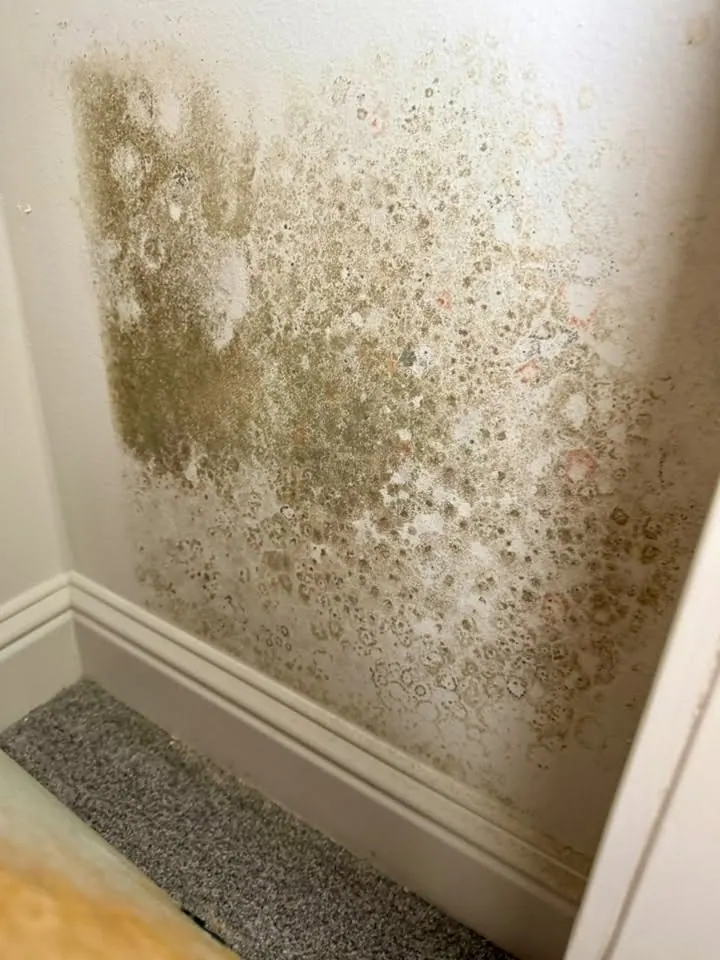
Causes
What do mold inspections in Country Club usually find?
Most findings in this area trace back to water that was present far longer than anyone realized. These are the sources an assessor checks first in local homes:
- AC closets. Overflowing drain pans, clogged condensate lines and sweating air handler cabinets. When the coil or ducts are involved, the next step is usually AC and air duct mold removal.
- Bathrooms and kitchens. Failed caulk, leaking shower valves, and dishwasher or ice-maker lines that drip into the cabinet base. Fresh leaks call for water damage mold cleanup before testing.
- Ceilings under roof penetrations. Aging flashing around plumbing vents and AC line sets lets rain into the attic, a pattern covered on our attic mold removal page.
- Exterior block walls. Wind-driven rain enters through stucco cracks and window frames, then meets the cooled interior surface and condenses.
- Closets on outside walls with little air movement, where stored items sit against a cool wall.
Many Country Club homes date from the 1990s and 2000s, so original water heaters, supply hoses and AC equipment are frequent culprits. Townhomes and condos add a complication: water from a neighbor's unit can show up in yours, and a written inspection report becomes valuable once an association or insurer gets involved.
Before the visit
What can you safely check before the inspection?
A few simple observations make the assessor's job faster and the results more useful. None of them involve opening walls.
- Note when the smell is strongest: morning, after rain, or when the AC starts.
- Use a flashlight under sinks, behind the toilet and around the water heater, feeling for damp wood or swollen particleboard.
- Open the AC closet and look at the drain pan. Standing water or rust streaks are worth mentioning.
- Leave a digital hygrometer in the suspect room for two or three days and write down the readings.
- Photograph stains with the date so changes can be tracked.
Skip store-bought settle-plate kits. Spores land on an open dish in practically every home, so a positive result says very little. A professional air sample compares indoor air with outdoor air, and that comparison is what reveals an indoor source.
For a day or two before air sampling, avoid deep cleaning, running air purifiers or ozone machines, and keeping windows open, unless the assessor tells you otherwise. Each one can skew the results and hide a real problem.
The pro visit
What happens during the assessor's visit, step by step?
- Interview. The assessor asks about past leaks, storms, renovations, symptoms and where the smell is worst.
- Exterior walk. Roof edges, stucco, window frames, grading and the AC condensate line outlet are checked for water entry.
- Room-by-room survey. Each room is checked by eye and nose, then scanned with a moisture meter and thermal camera.
- AC inspection. The air handler, coil, pan and reachable ducts are opened and examined.
- Sampling. An outdoor baseline comes first, then indoor air samples in suspect rooms and surface samples on any visible growth.
- Lab analysis. Samples are shipped under chain of custody.
- Report and protocol. You receive photos, moisture readings, lab results, the recommended scope, the containment level and clearance criteria.
- Clearance visit. After remediation, the assessor returns for a visual check, moisture readings and, usually, new samples.
Because Florida generally keeps the assessor from also remediating the same property, the protocol works as an independent second opinion when you collect remediation quotes.
Planning
What affects the cost of a mold inspection?
| Factor | Why it matters |
|---|---|
| Home size | More rooms and square footage take longer to survey. |
| Number of samples | Each air or surface sample carries its own lab fee. |
| Lab turnaround | Rush results cost more than standard processing. |
| Access | Attics, tight AC closets and condo building rules add time. |
| Report depth | A full written protocol takes more work than a verbal summary. |
| Clearance visit | Post-remediation testing is a separate trip with new samples. |
When comparing quotes, ask how many samples are included and whether the written report and protocol are part of the price.
Urgency
When is a mold inspection urgent?
Most inspections can be booked on a normal schedule. Move faster when someone in the home has breathing problems that are getting worse, when an infant or a person with a weakened immune system lives there, or when a strong odor appears suddenly after a storm. If water is still coming in or materials are soaked, drying comes before testing: start with stopping the leak and drying, then test once conditions settle.
FAQs
Mold inspection and testing questions
How long do mold test results take?
Most laboratories return air and surface sample results within a few business days. Rush analysis is often available for real estate deadlines or urgent health concerns, usually at extra cost. Ask the assessor which turnaround they booked before the visit.
Should I pay for testing if I can already see mold?
Often you do not need samples just to confirm visible growth is mold. The money is better spent on finding how far the moisture reaches. Testing still makes sense for clearance after remediation, insurance or legal documentation, or when the visible patch may be only part of the problem.
Can a home inspector do a mold inspection?
A general home inspection is not a mold assessment. In Florida, assessing mold for a fee generally requires a mold assessor license unless an exemption applies, so ask any inspector whether they hold one and check the number on the state's license lookup.
What counts as a normal spore count?
There is no federal limit for airborne mold. Assessors compare indoor samples with an outdoor sample taken the same day. Indoor counts similar to or lower than outdoors, with similar mold types, usually point to normal conditions; higher indoor counts or types missing outdoors suggest an indoor source.
Do I need to leave the house during the inspection?
No. An inspection is non-destructive apart from an occasional small borescope hole, and it usually takes a few hours depending on the size of the home and the number of samples. Being home is useful, because you can point out smells, stains and past leaks.
Will the inspection tell me what remediation will cost?
The assessor provides the scope: what to contain, remove and clean, and how clearance will be judged. Remediation pricing comes from remediation companies, and having the same written protocol lets you compare their quotes on equal terms.