Definition
What is black mold, and what does removing it involve?
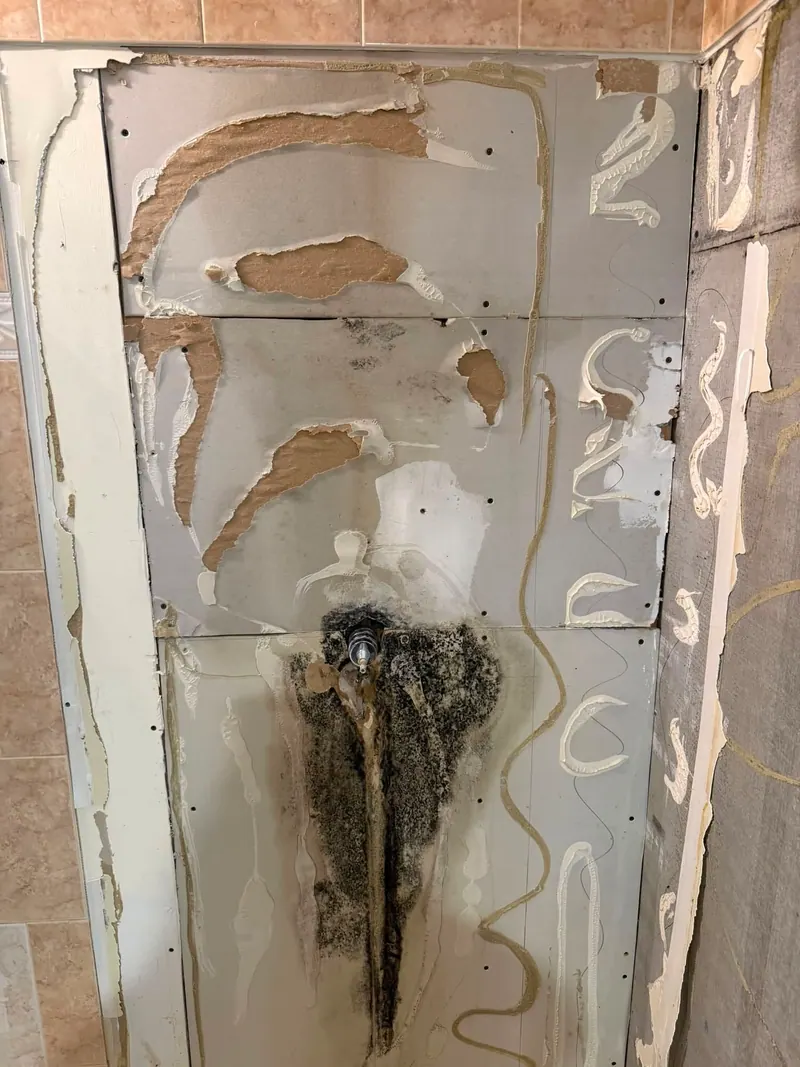
"Black mold" usually refers to Stachybotrys chartarum, a greenish-black mold with a slimy look when wet and a sooty look when dry. It grows on materials rich in cellulose, such as the paper face of drywall, ceiling tiles, cardboard and wood, and it needs those materials to stay wet for a long stretch. Finding it is a strong clue that water has been present for days or weeks, not hours.
Plenty of other molds are dark too, including Cladosporium and Aspergillus niger, so color alone does not confirm the species. Only a lab sample can do that. It rarely changes the plan, though, because every type of indoor growth is removed the same way.
Black mold removal is a full remediation job. The provider builds containment, removes the contaminated building material, HEPA-cleans the cavity and framing, dries the structure and confirms the area is clean before anything is closed up. Spraying a product on the surface and walking away is not removal. For the bigger picture of how this fits with leaks, attics and the AC, see the main page on mold remediation in Country Club.
Methods
How does professional black mold removal work?
The method is built around one idea: get the contaminated material out without spreading spores and dust to clean parts of the house.
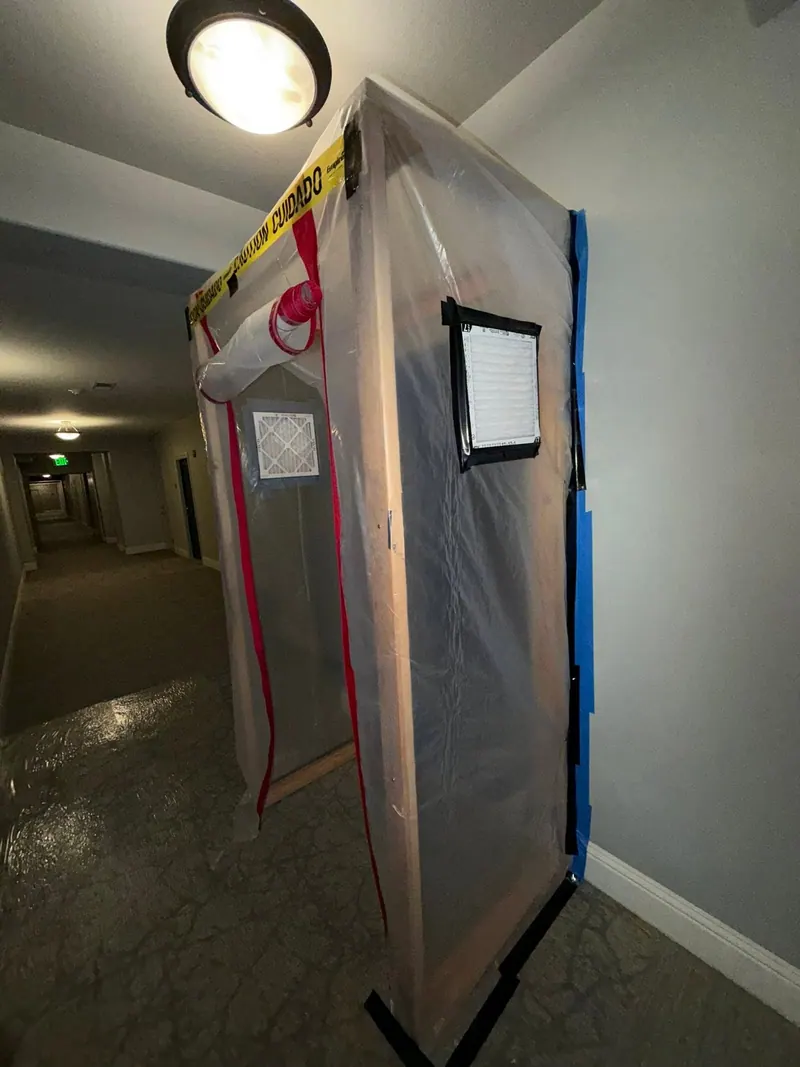
- Containment sized to the job. A small area under a sink may need only a mini-enclosure; a whole wall or room gets floor-to-ceiling plastic sheeting with a zipper door.
- Negative air. A HEPA air scrubber pulls air out of the enclosure and exhausts it outside, so air leaks flow in, never out.
- Protective gear. Technicians typically wear respirators, gloves, eye protection and disposable suits, which also stops them carrying spores through the house.
- Dust control. Moldy surfaces are lightly misted before cutting so fragments stay heavy and fall rather than float.
- Removal and bagging. Drywall is cut out past the visible growth and sealed in heavy plastic bags inside the containment before it is carried out.
- Cleaning the structure. Studs, sill plates and the slab are HEPA-vacuumed, scrubbed or sanded, then wiped down.
- Drying and verification. Dehumidifiers bring moisture readings down, and a final visual check and often clearance samples confirm the result.
| Material | Usual approach |
|---|---|
| Drywall and ceiling board | Removed and replaced |
| Insulation | Removed and replaced |
| Carpet and pad | Usually removed |
| Particleboard cabinets | Often replaced once swollen or growing |
| Solid wood framing | HEPA-vacuumed, sanded or wire-brushed, cleaned |
| Tile, metal, glass, concrete | Cleaned in place |
Warning signs
What are the warning signs of black mold?
- Greenish-black patches that look slimy or sooty, often starting low on a wall or in a corner.
- Spots that come back within days or weeks of being wiped off.
- A heavy, earthy smell inside a cabinet, closet or one particular room.
- Drywall that feels soft or crumbles when pressed, especially near the floor.
- Peeling or bubbling paint with dark staining showing underneath.
- A swollen cabinet floor under the kitchen or bathroom sink.
- Dark staining around a toilet base or along the edge of a shower.
- Breathing or allergy symptoms that get worse in one room of the house.
Causes
Why does black mold grow in Country Club homes?
Stachybotrys needs material that stays wet, so it points to slow, steady leaks more than one-time spills. These are the usual sources in local houses and townhomes:
- Supply lines and shut-off valves under sinks and behind toilets, many of them original to homes built in the 1990s and 2000s. A drip of a few drops a minute is enough.
- Toilet wax rings and shower pans that leak into the subfloor and the bottom of the wall.
- AC drain overflows that soak the wall next to the air handler closet.
- Roof and window leaks that wet ceiling drywall and wall cavities during the summer rainy season. Ceiling growth is often tied to attic mold.
- Water damage that was never fully dried, such as a water heater failure where the carpet was replaced but the wall cavity stayed wet. Our water damage mold cleanup page explains proper drying.
Concrete block exterior walls add one more factor. Drywall fastened to furring strips over block can trap moisture in the gap, and that hidden space behind cabinets is exactly where black mold tends to go unnoticed.
Safe checks
What can you safely do before a pro arrives?
Your job before the visit is to stop the water and avoid spreading the mold, not to remove it.
- Shut off the water at the valve under the sink or behind the toilet if a leak is still active.
- Take clear photos and short videos of the growth, the leak and any damaged materials.
- Close the door to the room and turn off fans that blow toward the area.
- Keep children and pets away, and move belongings out of the cabinet if you can do it without touching the growth.
EPA guidance allows homeowners to clean small areas, under about 10 square feet, on hard surfaces with detergent and water while wearing an N95 respirator, gloves and goggles. Drywall with growth on it is a different matter, because the mold is inside the paper and usually on the back of the board too.
Never mix bleach with ammonia or other cleaners; the fumes are dangerous. And do not tear out moldy drywall yourself without containment. Breaking the board releases a burst of spores into the rest of the house.
The pro visit
What happens when a remediation crew arrives?
- Walkthrough and readings. The crew confirms the leak is stopped and maps moisture around the visible growth.
- Protecting the house. Floors on the path to the work area are covered and HVAC vents in the room are sealed.
- Building containment. Plastic walls, a zipper door and a HEPA air scrubber go up and are tested for negative pressure.
- Removal. Cabinets are pulled if needed, drywall is cut out to clean material, and debris is bagged inside the enclosure.
- Cleaning. Framing and the slab are HEPA-vacuumed, scrubbed and wiped; stubborn staining on wood may be sanded.
- Drying. Dehumidifiers and air movers run until wood and concrete reach normal readings.
- Verification. A visual check, moisture readings and often clearance testing by an independent assessor.
- Rebuild. New drywall, paint and cabinets go in only after the area passes.
Planning
What affects the cost of black mold removal?
| Factor | Why it matters |
|---|---|
| How far it spread | More drywall, insulation and framing to remove and clean. |
| Containment size | A full-room enclosure takes more setup than a mini-containment. |
| Cabinets and fixtures | Pulling and resetting vanities or kitchen cabinets adds labor. |
| Leak repair | Plumbing or roof work is often a separate trade. |
| Clearance testing | An independent assessor's visit is a separate cost. |
| Rebuild | Drywall, paint and replacement cabinets may be quoted separately. |
Urgency
When is black mold an emergency?
Treat it as urgent when growth covers a large area or more than one room, when it is inside the AC system and being blown through the house, when water is still actively leaking into the wall, or when someone in the home is struggling to breathe, is pregnant, very young, elderly or immune-compromised. In those cases, call the same day, keep sensitive people out of the affected area, and seek medical care for anyone with serious symptoms.
FAQs
Black mold removal questions
Is black mold toxic?
Stachybotrys chartarum can produce mycotoxins, but the CDC advises treating all indoor mold the same way: remove it and fix the moisture. Any mold can irritate the eyes, nose, throat and lungs, and people with asthma, allergies or weak immune systems react most.
Can I paint over black mold?
No. Paint, even mold-resistant paint, seals growth in place while the moisture behind it keeps feeding it. The stain usually bleeds back through within weeks, and the hidden damage grows. Remove the material, fix the leak, then paint new surfaces.
Is it safe to sleep in the house with black mold?
For a small area in a room you can close off, most healthy adults can stay. Keep the door shut and avoid disturbing the growth. If the mold is widespread, in the AC system, or anyone in the home has breathing problems, staying elsewhere until containment is up is the safer choice.
Will black mold come back after removal?
Not if the moisture source is fixed and the area is dried and cleared before rebuilding. Mold returns when a leak is left unrepaired, humidity stays high, or contaminated material is covered instead of removed.
Do I have to throw away my belongings?
Hard items such as glass, metal, sealed plastic and finished wood furniture can usually be cleaned. Porous items with visible growth, such as mattresses, upholstered furniture, cardboard and paper, are often discarded. Clothing and fabrics can sometimes be laundered or professionally cleaned.
How much drywall has to be removed?
Enough to reach dry, clean material. Remediators usually cut back past the visible growth and use moisture readings to decide where to stop, because mold on the back of the board and inside the cavity often extends beyond what shows on the painted side.