Definition
What is AC and air duct mold removal?
AC and air duct mold removal is the cleaning, and where needed replacement, of the parts of a central air system where mold grows: the evaporator coil, the drain pan, the blower, the insulated lining inside the air handler cabinet, the supply and return ducts, and the registers in each room. Because the system circulates every bit of the home's air, growth anywhere in it can affect the whole house.
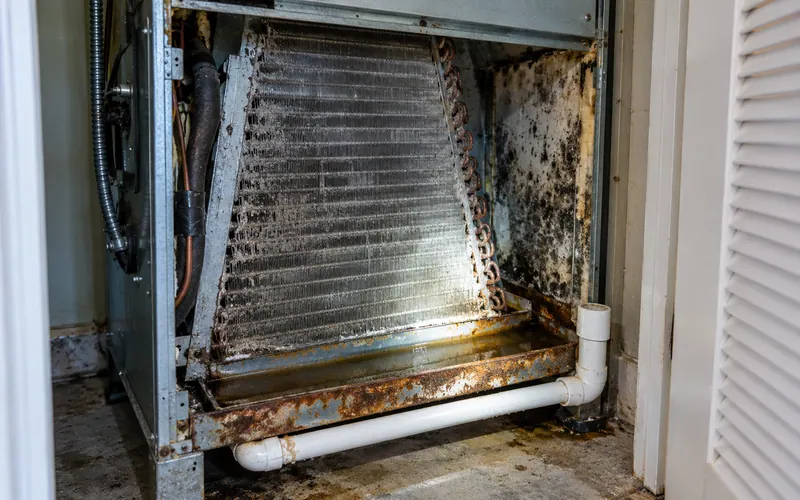
The coil is designed to be cold and wet. It pulls moisture out of the air, which drips into the pan and drains outside. Add household dust as food, and you have ideal mold conditions whenever the drain backs up, the system short-cycles, or the cabinet stays damp between cycles.
Proper removal treats both halves of the problem: the contamination already in the system, and the moisture condition that let it grow. It often needs two skill sets, HVAC work and contained mold cleaning, which is why it is one of the most specialized jobs handled through our line for mold cleanup in 33015.
Methods
How does professional AC mold cleaning work?
The approach depends on the material each part is made of. Hard, non-porous surfaces can be cleaned. Porous materials that hold mold in their fibers usually cannot.
| Component | Usual approach |
|---|---|
| Evaporator coil | Cleaned with coil cleaner and rinsed; replaced if corroded or badly fouled |
| Drain pan and line | Cleaned and flushed; rusted pans replaced |
| Blower wheel and motor | Removed, cleaned and reinstalled |
| Cabinet insulation liner | Replaced if moldy, or sealed after cleaning where appropriate |
| Sheet metal ducts | Cleaned under negative pressure with brushes and air whips |
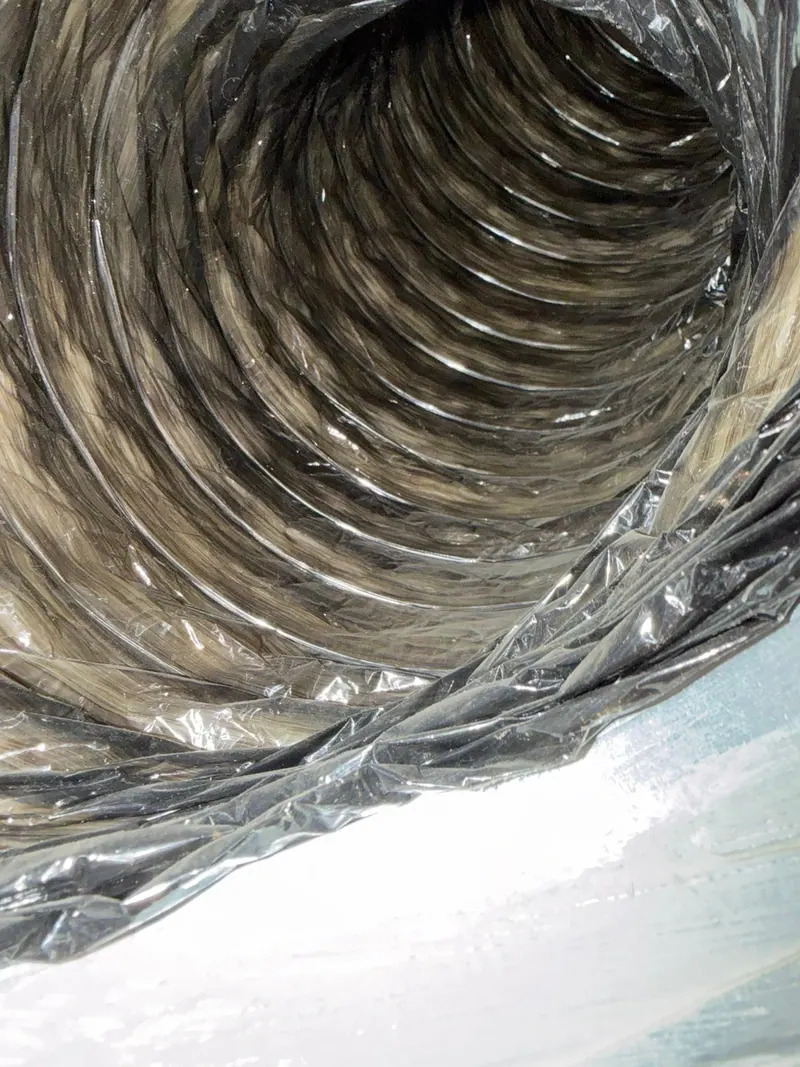
| Duct board and flex duct | Usually replaced when moldy, as EPA duct guidance notes |
| Registers and grilles | Removed, washed, and the boots behind them cleaned |
Duct cleaning is done with the system under negative pressure: a HEPA-filtered collection unit connects to the ductwork so loosened debris is pulled out rather than blown into the rooms. Look for work done to the NADCA standard for HVAC cleaning. Sealing registers and the work area keeps dust contained while the crew works.
Warning signs
What are the signs of mold in an AC system?
- A musty smell in the first minute after the system starts a cycle.
- Dark spots or fuzz on supply registers and the ceiling right around them.
- Vents that sweat or drip on humid afternoons.
- Water on the closet floor around the air handler, or a pan that is always full.
- A condensate line that clogs again and again, often from slime growing inside it.
- Allergy symptoms that flare when the AC runs and ease when it is off.
- Indoor humidity above 60% even though the AC runs constantly.
- A clammy feeling indoors with the thermostat set cool.
Causes
Why do AC systems in Country Club grow mold?
South Florida asks a lot of an air conditioner. It runs through most of the year against hot, humid outdoor air, and small design or maintenance problems show up as mold faster here than in drier climates.
- Oversized equipment. A unit too big for the house cools quickly and shuts off before it has removed much moisture, leaving the air cool but damp.
- Fan set to "ON". Running the blower continuously blows air across a wet coil between cycles and puts moisture back into the house.
- Clogged condensate drains that back up into the pan and cabinet, or overflow into the wall and floor around the closet. That overflow often turns into a water damage mold problem.
- Ducts in a hot attic. Leaky or poorly insulated ducts pull in humid attic air or sweat on the outside, wetting insulation and ceilings. See attic mold removal for that side of it.
- Dirty or skipped filters that let dust coat the coil and feed growth.
- Aging systems. Equipment and duct board installed during the 1990s and 2000s building boom is now old enough for rusted pans, sagging ducts and worn insulation.
Safe checks
What can you check yourself before calling?
- Replace the air filter and note how dirty the old one was.
- Set the thermostat fan to "AUTO" instead of "ON".
- Open the closet and look at the drain pan with a flashlight. Standing water, rust or slime is worth reporting.
- Find where the condensate line exits outside and see whether it drips while the system runs.
- Put a hygrometer in the main living area for a few days.
- Wipe the face of a metal register with mild detergent and see whether the spotting returns within days.
Ask your HVAC technician about a float switch on the drain pan or condensate line. It shuts the system off when water backs up, so a clog becomes a warm afternoon instead of a soaked closet floor.
Do not spray household cleaners or bleach into the ducts or onto the coil, and do not run ozone machines. Chemicals can damage coil fins and duct lining, and ozone irritates the lungs without removing the mold.
The pro visit
What happens during a professional AC mold visit?
- System inspection. The cabinet is opened and the coil, pan, blower, liner and accessible ducts are examined, often with a camera inside the duct runs.
- Humidity check. Indoor humidity, supply air temperature and system sizing clues are recorded.
- Protection. The closet and work areas are covered, and registers are sealed.
- Equipment cleaning. The coil is cleaned and rinsed, the blower is pulled and cleaned, and the pan and drain line are cleared.
- Liner and duct work. Moldy cabinet insulation and porous duct sections are replaced; metal ducts are cleaned under negative pressure.
- Registers and boots. Each grille is removed and washed, and the opening behind it is cleaned.
- Moisture fixes. Recommendations follow: fan settings, drain safety switch, duct sealing, or a whole-home dehumidifier.
- Verification. A final look, a fresh filter and, if needed, air sampling to confirm the result.
Planning
What affects the cost of AC and duct mold removal?
| Factor | Why it matters |
|---|---|
| Number of systems | Two-story and larger homes may have more than one air handler. |
| Duct material | Moldy duct board or flex duct is replaced, not cleaned. |
| Number of registers | Each supply and return adds cleaning time. |
| Coil condition | A corroded coil may need replacement instead of cleaning. |
| Access | Tight closets and attic duct runs take longer to reach. |
| Humidity fixes | Duct sealing or a dehumidifier are added costs with long-term payoff. |
Urgency
When is AC mold urgent?
Act quickly when water is overflowing from the air handler into the wall or floor, when visible growth is spreading on several registers at once, or when someone with asthma or a weakened immune system is reacting each time the system runs. Because the AC spreads whatever is inside it to every room, a heavily contaminated system is a whole-house problem and should be cleaned before it seeds growth elsewhere.
FAQs
AC and air duct mold questions
Can mold in my AC make the whole house smell?
Yes. The air handler moves all of the home's air through the same coil and ducts many times a day, so growth on the coil, in the drain pan or on duct lining can spread a musty odor and spores to every room the system serves.
Is regular duct cleaning enough to remove mold?
Not always. Bare sheet metal ducts can be cleaned. Porous materials such as fiberglass duct board, flex duct liners and cabinet insulation that are moldy usually need to be replaced, as EPA guidance on duct cleaning notes. Cleaning also fails if the humidity problem behind the growth is not fixed.
Should I use a fogger or ozone machine in my ducts?
No. EPA advises against ozone generators in occupied homes, and spraying chemicals into ducts is only appropriate for products registered for that specific use. Physical cleaning or replacement of contaminated parts is what actually removes mold.
Do UV lights stop AC mold?
UV lights aimed at the coil can help limit growth on that surface, but they do not clean existing contamination, reach the ducts or fix humidity. Think of them as an add-on after the system is cleaned and the moisture cause is corrected.
Why does my AC keep growing mold even after cleaning?
Recurring growth usually means the system is not drying the air enough: an oversized unit that short-cycles, the fan left on constantly, leaky ducts pulling in humid attic air, or a drain that keeps clogging. Those causes have to be corrected or the mold returns.
Can I keep using the AC while waiting for a provider?
For light growth, most people keep it running with a new filter, because shutting the AC off in a Florida summer raises indoor humidity. If growth is heavy, water is leaking from the unit, or someone in the home is reacting badly, ask the provider whether to shut it down until it is cleaned.