Definition
What is attic mold removal?
Attic mold removal is the cleanup of mold growing on the underside of the roof decking, on rafters and trusses, and in the insulation on the attic floor, followed by correcting the moisture that caused it. The attic is a space most homeowners never see, so growth there can spread for a long time before a ceiling stain or a musty upstairs room gives it away.
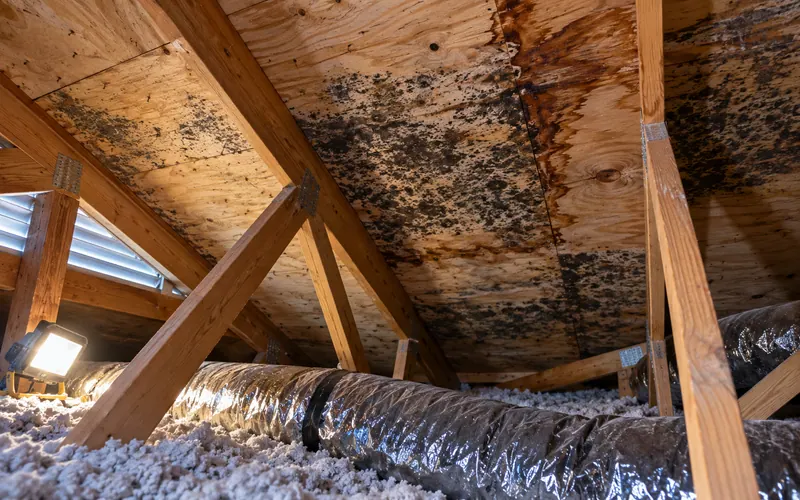
Attic growth often looks like gray to black staining across plywood or OSB, sometimes with white fuzzy patches. It is usually a surface problem on the wood, which is good news: sound decking can typically be cleaned and sealed instead of replaced. Soft, delaminated or rotted panels are a different matter and point to a leak that has been active for a long time.
Because the roof, the AC ducts and the bathroom vents all meet in the attic, removal only lasts when the source is found. That is why a good provider treats the attic as part of the house, the same whole-home approach behind any professional mold remediation near you.
Methods
How is mold removed from an attic?
Attic work is hot, tight and dusty, so the methods are chosen to remove growth from wood efficiently while keeping debris out of the rooms below.
- Containment at the hatch and sealed ceiling openings, with a HEPA air scrubber creating negative pressure in the attic.
- Insulation removal by high-powered vacuum, bagging wet or moldy material straight into a truck or sealed bags.
- Physical cleaning of the wood by HEPA vacuuming, sanding or wire brushing.
- Media blasting with dry ice or soda on larger jobs, which strips growth from decking and trusses quickly without soaking the wood.
- Sealing cleaned wood with an encapsulating coating that resists future growth. It goes on after cleaning, never instead of it.
- Replacement of decking that is soft or rotted, usually coordinated with the roofer.
- New insulation once the space is clean, dry and the leak or ventilation problem is fixed.
| Method | Best for | Trade-off |
|---|---|---|
| HEPA vacuum and sanding | Small or moderate areas | Labor-intensive in a hot attic |
| Dry ice blasting | Large areas of decking | Specialized equipment |
| Soda blasting | Heavy staining on framing | Leaves residue to clean up |
| Decking replacement | Rotted or delaminated panels | Requires roofing work |
Warning signs
What are the warning signs of attic mold?
- Tea-colored ceiling stains that grow or darken after storms.
- A musty smell on the top floor, in closets with attic access, or from ceiling vents.
- Dark staining on the decking visible from the attic hatch.
- Wet, matted or compressed insulation in one area of the attic floor.
- Rusty nail tips poking through the decking, a sign of repeated condensation.
- Peeling or bubbling ceiling paint, often near a light fixture or the attic hatch.
- Daylight showing through the roof at penetrations or edges.
- Sagging ceiling drywall or nail pops below the area where water collects.
Causes
What causes attic mold in Country Club homes?
Attic moisture comes either from above, through the roof, or from below, out of the living space and the AC system. Local homes see plenty of both.
- Roof leaks. On tile roofs the tiles shed most water, but the underlayment beneath is what keeps the deck dry. When it ages or tears, wind-driven summer rain reaches the plywood. Flashing at vents, valleys and walls is another common entry point.
- Roof penetrations. Plumbing vents, AC line sets and old satellite mounts lose their seals over time.
- Bathroom fans and dryer vents that blow warm, wet air into the attic instead of through the roof or wall.
- AC ducts and equipment in the attic. Cold ducts sweat in hot attic air, and air handlers installed up there can overflow their pans. Our AC and air duct mold removal page covers the system side.
- Blocked or missing ventilation, such as soffit vents buried by insulation, that traps hot, humid air against the decking.
- Storm damage that lifts tiles or shingles, which ties into storm and flood mold cleanup.
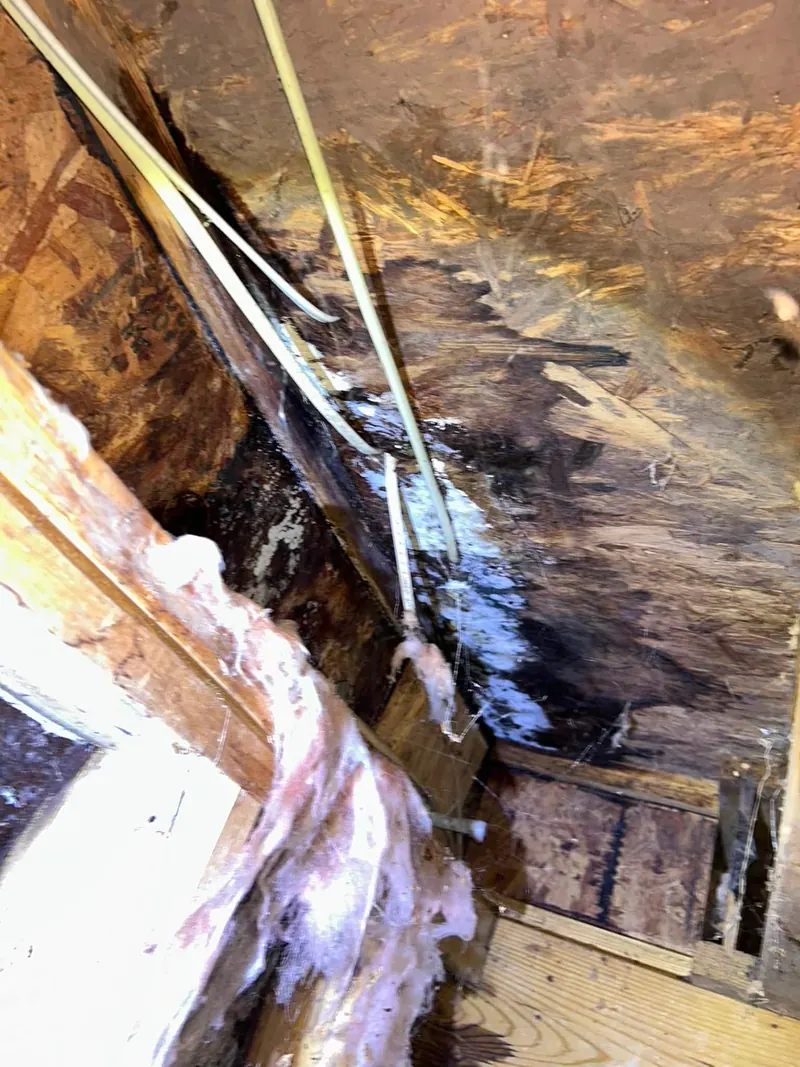
Many roofs on homes from Country Club's 1990s and 2000s growth years have been replaced at least once, but those that have not are well into the age range where underlayment and flashing failures become common.
Safe checks
What can you safely check before a pro comes out?
- Look into the attic from the hatch with a strong flashlight, scanning the decking above any ceiling stain.
- Check whether bathroom fan ducts actually connect to a roof or wall vent.
- Photograph ceiling stains after each heavy rain to see whether they grow.
- Note whether the stain is near an AC register or the air handler, which points to a system cause instead of the roof.
South Florida attics get dangerously hot by late morning. If you go in, go early, take water, wear an N95, and step only on joists or decking; the ceiling drywall between them will not hold your weight.
Planning a re-roof? Have the attic inspected first. Decking that needs replacing can be swapped while the roof is open, which is far simpler than doing it later from inside the attic.
The pro visit
What happens during an attic mold job?
- Attic inspection. Decking, framing, insulation, vents, ducts and roof penetrations are checked, with moisture readings on the wood.
- Source call. The provider separates roof leaks from ventilation or AC causes and tells you which trade needs to fix it.
- Setup. The hatch and ceiling openings are sealed and a HEPA air scrubber is placed.
- Insulation out. Affected insulation is vacuumed out and bagged.
- Wood cleaning. Decking and trusses are cleaned by vacuum, sanding or blasting.
- Sealing. Cleaned surfaces get a mold-resistant encapsulating coat.
- Repairs and ventilation. Roof repair, vent corrections and duct fixes happen, often by separate trades.
- New insulation and check. Fresh insulation goes in once the attic is dry and clean, followed by a final review.
Planning
What affects the cost of attic mold removal?
| Factor | Why it matters |
|---|---|
| Area of decking affected | More square footage to clean and seal. |
| Cleaning method | Blasting covers large areas faster but needs special equipment. |
| Insulation volume | Removal and replacement scale with attic size. |
| Access and height | Low-slope, tight attics slow every step. |
| Decking replacement | Rotted panels bring in roofing work. |
| Source repairs | Roof, vent or duct fixes are usually priced separately. |
Urgency
When is attic mold urgent?
Move quickly when a ceiling is sagging or dripping, when water comes through light fixtures or near wiring, when a storm has opened part of the roof, or when a strong musty smell is reaching bedrooms through ceiling vents. A sagging, water-loaded ceiling can fall without warning, so keep people out of the room below until it is checked.
FAQs
Attic mold questions
Does attic mold affect the air in my house?
It can. Ceilings have gaps at light fixtures, the attic hatch and duct boots, and leaky AC ducts in the attic can pull attic air into the system. A musty smell on the top floor or from ceiling vents is a sign attic air is reaching living space.
Do I need a new roof if the attic has mold?
Not necessarily. Many attic mold jobs need only a repair to flashing, a penetration or a section of underlayment, plus cleaning. A roof near the end of its life with widespread leaks is a different story, and it is often smart to time remediation with the re-roof.
Can attic mold be cleaned instead of replacing the plywood?
Usually yes. Surface growth on sound plywood or OSB is commonly removed by HEPA vacuuming, sanding, wire brushing or media blasting, then sealed. Decking that is soft, delaminated or rotted from a long leak is replaced.
Why is there mold in my attic if the roof does not leak?
Moisture can come from inside the house. Bathroom fans or dryer vents that dump into the attic, sweating AC ducts, a dripping air handler and blocked soffit vents can all keep attic surfaces damp enough for mold without a single roof leak.
Is it safe to go into my attic to look?
Look from the hatch with a flashlight if you can. South Florida attics get dangerously hot by midday, ceilings will not hold your weight between joists, and disturbing moldy insulation releases dust. If you go in, go early, wear an N95 and step only on framing or decking.
Does the attic insulation have to be replaced?
Wet, compressed or visibly moldy insulation is normally removed, because it holds moisture and spores and loses its insulating value. Dry insulation away from the problem area can often stay, though some jobs replace it all for a clean start.